

The Retiring Workforce Problem: Capturing Expert Knowledge

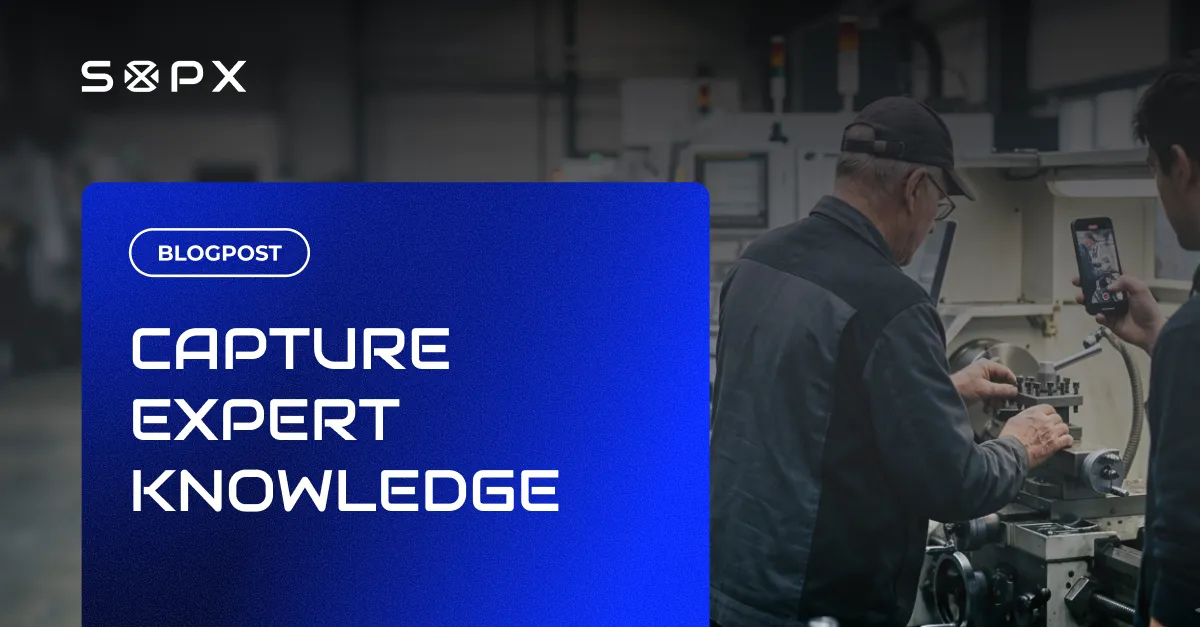
Manufacturers are losing decades of process knowledge as workers retire. Learn how teams capture that knowledge with video and AI before it walks out the door.
TL;DR
As experienced operators retire, manufacturers lose process knowledge that was never written down. Recording real work on video and converting it into AI-structured work instructions preserves that expertise, trains new hires faster, and keeps the know-how in the business instead of walking out the door.
- Retiring operators take setup shortcuts, machine know-how, failure warning signs, and the reasoning behind each step with them when they leave.
- Experienced workers rarely document well because they explain while doing and skip “obvious” details they have internalized.
- Recording short videos during normal work captures timing, tool handling, machine feedback, and safety checks that text misses.
- AI breaks long recordings into clear steps and consistent structure, so teams review and refine rather than write from scratch.
- SOPX lets an expert film a process on a phone, then drafts a structured SOP in under 10 minutes with each step as a trimmed clip and editable description.
The knowledge problem no one has time to solve
We hear the same thing from ops managers every week:
- “Our best people are retiring.”
- “They know things that aren’t written anywhere.”
- “We keep saying we’ll document it, but production comes first.”
This isn’t hypothetical. It’s happening one retirement at a time, and it’s hitting hardest in the US and Europe.
When experienced operators leave, they take with them:
- Setup shortcuts
- Machine usage know-how
- Failure warning signs
- The “why” behind each step
- Years of hard-earned judgment
Replacing a person is possible.
Replacing their tribal knowledge is not.
Why retiring experts rarely leave documentation behind
In theory, this is where SOPs should help.
In reality, they rarely do.
Experienced workers:
- Don’t think in documents
- Explain things while doing them
- Adjust steps based on context
- Skip “obvious” details they’ve internalized
By the time retirement approaches, asking them to write procedures is unrealistic.
Most ops managers already know how it ends, with partial notes, outdated files, or nothing at all.
Operations managers and owners and founders feel this risk most sharply, because the knowledge that keeps the line running often sits in one person’s head. The practical fix is AI video-to-SOP. Have that expert film the process on a phone before they leave, then let AI draft a structured SOP in under 10 minutes, with each step as a trimmed video clip and an editable description. Once it is captured, edit it once and everyone sees the current version, so the know-how stays in the business instead of walking out the door.
The risk compounds with every new hire
The workforce is changing at the same time.
Manufacturers are onboarding:
- Younger (Gen Z) workers who expect digital, visual learning
- Foreign workers who don’t share the same native language
- Employees who rotate roles faster than before
The result is friction:
- Shadowing takes longer
- Instructions vary by shift
- Knowledge transfers inconsistently
- Supervisors answer the same questions over and over
On forums and in our own customer calls, ops managers describe the same pain:
“We train people, but everyone ends up doing it slightly differently.”
Video captures what retirees actually know
The fastest way to preserve expert knowledge is not writing.
It’s recording real work as it happens.
Short videos capture:
- Sequence and timing
- Tool handling
- Machine feedback
- Safety checks that never make it into text
- Subtle, informal explanations that actually matter
Most experts are comfortable explaining their work verbally.
Asking them to “talk through what you’re doing” while working feels natural and fast.
This turns knowledge capture into a side effect of doing the job, not a separate project.
Turning raw video into usable work instructions
Raw video alone is not enough.
Long recordings are:
- Hard to search
- Hard to reuse
- Hard to standardize
AI fixes that.
AI can:
- Break long videos into clear steps
- Extract actions, warnings, and context
- Create consistent structure across procedures
- Make instructions usable on the shop floor
Instead of writing from scratch, teams review and refine what already exists.
Why this works for the next generation of workers
Younger employees already learn from:
- Short videos
- On-demand content
- Search-driven answers
When work instructions are:
- Visual
- Broken into steps
- Available on a phone or tablet
Adoption increases naturally. Onboarding time decreases.
For multilingual teams, the same instructions can be translated without duplicating effort. Everyone follows the latest standard.
The next step: interacting with work instructions, not searching them
Static steps aren’t the end of the story.
Instead of:
- Searching PDFs
- Scrolling long documents
- Asking coworkers
Operators will:
- Ask questions directly
- Get step-specific answers
- Jump to the exact moment in a process
Think of it as ChatGPT for your own shop-floor knowledge, grounded in real videos and real procedures, not generic advice.
Captured knowledge becomes:
- Always accessible
- Context-aware
- Consistent across shifts and locations
A sneak peek of what we’re building for 2026. Try SOPX free.
From risk to advantage
The retiring workforce is a real risk.
It’s also a narrow window of opportunity.
Teams that act early:
- Preserve decades of experience
- Train faster with less supervision
- Reduce variability across operations
- Build a knowledge base that grows instead of disappearing
Manufacturers who treat knowledge as infrastructure, not as something stored in people’s heads, train faster and build IP that compounds.
That shift is already happening.
Frequently Asked Questions
How can manufacturers capture expert knowledge before experienced operators retire?
Record experts performing real work while they explain what they’re doing and why.
Video captures details that are rarely written down, such as timing, adjustments, warnings, and judgment. AI then turns that footage into structured work instructions that remain usable long after the expert leaves.
Is it realistic to document processes when production pressure is high?
Yes, if documentation is treated as a byproduct of the work instead of a separate task.
Recording short videos during normal operations takes far less effort than asking experts to write SOPs. It also avoids pulling them away from production.
How does this approach help with training new and younger workers?
Younger and Gen Z workers learn faster from visual, on-demand content.
Step-by-step video instructions reduce reliance on shadowing, shorten onboarding time, and let new hires learn without constant supervision.
Can this work for multilingual or international manufacturing teams?
Yes. Instructions are generated from real processes and structured into clear steps, so they translate consistently across languages.
Every operator follows the same standard, regardless of location or native language.
What does “chatting with work instructions” actually mean?
Operators ask questions in plain language and get answers from their company’s own procedures and videos.
Instead of searching PDFs or asking coworkers, they jump straight to the relevant step in a process. It’s like ChatGPT, but grounded in verified shop-floor knowledge.
This feature isn’t available yet. Sign up for free now to get it the day it ships.
Try SOPX free or just say hello to [email protected].